
Introduction
Right from the screening of the first Bollywood horror film, Mahal (1949), in Bollywood, the typical Bollywood horror movie archetypes, such as Bhoots, Chudels, Aatma, Brahma Rakshas, etc., have dominated all movies of the horror genre. When the horror film Go Goa Gone was released in 2013 as a zombie apocalypse movie, everyone was curious about why the zombies were replacing the typical Bollywood horror movie archetypes (all derived from Indian culture, mythology and folklore), such as Bhoots, Chudels, Aatma, Brahma Rakshas, etc.
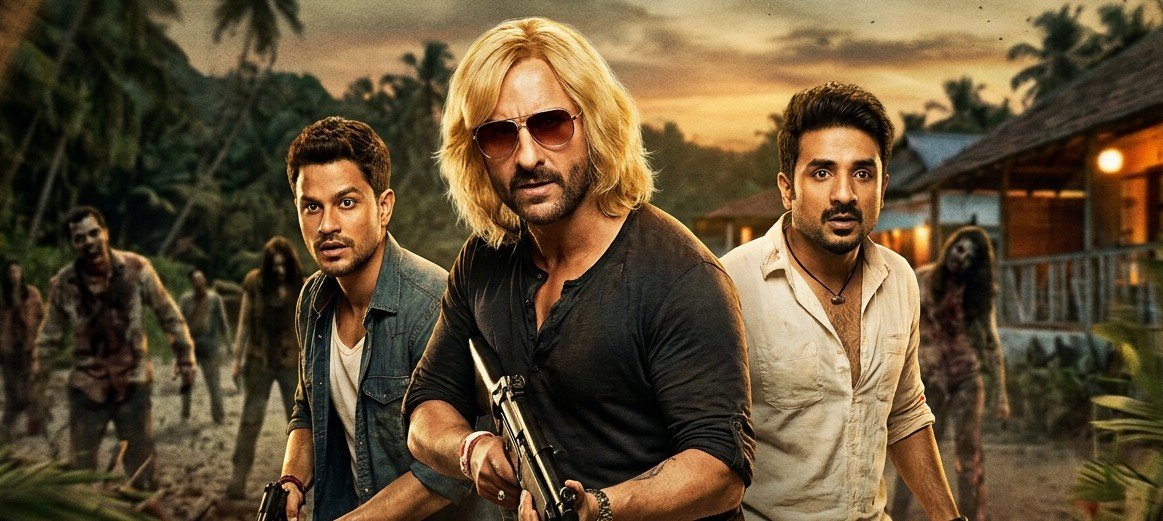
The film Go Goa Gone was a very significant deviation from the stereotypes of Bollywood horror movies. This was the first instance where Indian filmmakers deviated from their usual horror content that includes Indian archetypes and adopted the western horror content element-the zombies. Moreover, Go Goa Gone received immediate acceptance, box-office success, and applause from the Indian audience.
So, it is obvious to think about how Indian audiences accepted the monsters that did not belong to their cultural roots. What reasons paved the way for zombies in the Bollywood horror genre, which has always been obsessed with the Indian supernatural elements, rooted in age-old legends?
Also, this post will try to seek an answer to the question that whether horror film writers should now focus on modern horror archetypes and write film scripts and stories that show western horror elements such as zombies, humanoids, vampires, etc.
Let us try to seek answers.
Reasons Bollywood Horror Content Needs a Shift from its Age-Old Archetypes
Why did Go Goa Gone need to import modern horror archetypes from Hollywood?
While Romance, action, suspense, drama, and comedy continue to be the mainstream genres in Bollywood, Bollywood filmmakers have experimented with ghosts, spirits, and paranormal movies aplenty. However, these movies focused on Indian horror elements such as Bhoots, Pisaach, Pret, Aatma, Chudel, Dayan, Rakshas, etc.
Never before the film Go Goa Gone, have Indian filmmakers considered it worthwhile to put their efforts and money into a zombie film. Popular Western Horror sub-genres like Humanoids, Cenobites, Slasher Horror, Nature Horror, Mummy films, Body horror, etc., have never been attempted in Bollywood.
But Bollywood started a different journey altogether with the release of Go Goa Gone (2013).
Why?
| There is always a need to change content based on the current audience’ taste.
Today, the Indian audience is more knowledgeable about global movie standards than the old generation. With better access to Hollywood films with OTT platforms, their tastes, expectations, and approach towards movies have changed. Besides, there are multiple venues to access films that were censored in India. This may have been something that prompted the Indian filmmakers to create India’s first popular zombie movie–Go Goa Gone. |
Let’s see some more reasons as to why there is a need for Indian filmmakers to import the horror archetypes from Hollywood:
1. Sophistication of Fear
Since primitive times, man has created objects to express his inherent fear. Initially, the primitive man feared nothing but Nature. He was afraid of lightning, storms, fire, water bodies, and phenomena he was unable to comprehend.
Gradually, when he learned to tame Nature, he was caught in a fix. He realized that it was fear that kept him alive for so many years, and now he cannot do without it. It may seem very absurd, but the truth is that man longs for his object of fear.
He needs something to project this instinctive feeling. It is in this psychological dilemma that he created the Stereotypes of fear: ghosts, evil spirits, Rakshasas, the devil, and many more. All were the product of his own imaginative mind.
With scientific development and the growth of modern society, man became sophisticated, and so his fears. In the modern world, there is little room for old stereotypes. Films such as Goa Gone Gone represent that sophistication of fear where the monsters of the past get replaced by modern-day monsters such as zombies, vampires, humanoids, and cenobites.
There is a need for Indian horror filmmakers to bank upon this change in the fear archetype. They cannot keep serving the old dish to new age audience.
2. Elite Indian Audience
Recent Bollywood films portray NRIs and upper-middle-class characters who are sophisticated in their manners and relationships. This group is the ‘elite class’ of India. Most recent Bollywood horror films, such as Ragini MMS, Bhoot, Creature, Raaz Reboot, Alone, and Raaz 3, were set in modern India and featured upper-middle-class characters.
With Globalization and the rise in per capita income in third-world countries like India, the upper-middle class is a large group of regular moviegoers.
Filmmakers know their profits will come from the pockets of these elite moviegoers, so they try to keep the settings of their movies relatable to the elite class. Hence, zombies find their way into Bollywood film noir.
3. Financial Reasons
Most of the Bollywood horror films are either directly copied or inspired by Hollywood horror films. The reasons for copying may be exclusive to different filmmakers, but the most important reason is the guarantee of success. Bollywood directors are under constant pressure to recover their costs and revenues.
Copying a successful Hollywood film is the best way out. Many Bollywood filmmakers copy because they think an Indian remake of a successful Hollywood film will also be successful, provided the American movie can be adapted to reflect Indian sensibilities.
4. Familiarity Breeds Contempt
Horror films are so popular because they reflect a country’s culture and the traditional superstitions that reside in its people. When Indian filmmakers make a horror movie, they do so with the understanding that the public genuinely believes in the existence of Aatma, Rakshasas, Vetaals, or Asuras (Indian horror archetypes).
Filmmakers believe the Indian audience is familiar with the meanings of these horror archetypes. These archetypes have been popular in Indian religious scriptures, and therefore, the Indian audience loves to see the traditional monsters from their scriptures on the big screen.
Curiosity about the unknown is what drives horror movies, and even the Indian audience is no different. But as the saying goes, familiarity breeds contempt; over the years of feeding on the same content, Indian audiences have grown wary of seeing these monsters repeatedly. They need to see something new and unknown to them.
Now that the great majority of present-day audiences no longer find Asuras or Vetaals fascinating and are distanced from the events of the past, they crave changing their horror stereotypes. Hence, it paved the way for the import of new ones from Hollywood.
5. Déjà Vu Effect
Zombie is similar to the Indian Rakshasa.
Indian audiences love to see something that could give them an on-screen confrontation of their religious and traditional past. Indian mythological texts like the Ramayana, the Puranas, and the Mahabharata are infused with figures like the Rakshasas, Asuras, Danavas, and the Yaksha figures that would devour a man in a single gulp.
They were the earliest references to cannibalism in India. Moreover, it was said that some of these figures had no mind (mati). Go Goa Gone employs a postmodern approach to achieve the desired déjà-vu effects. It lets Indian audiences regain full knowledge of their past, and they are able to see the Rakshas as the Indian counterpart of the Western zombies.
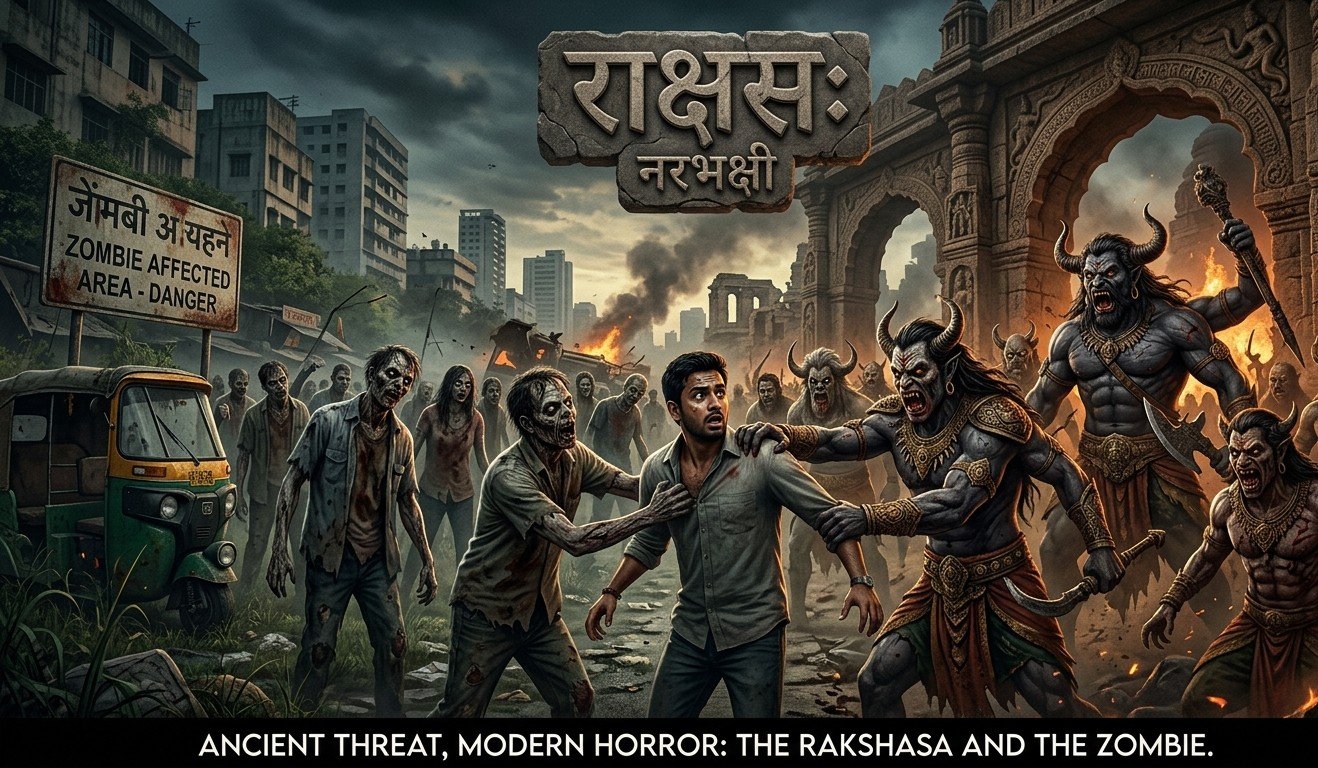
Even in the Hollywood zombie film World War Z, the protagonist, seeking the cause of a worldwide virus outbreak, is informed that the Israeli army intercepted a message from an Indian Army general about the outbreak. The message refers to a situation where the Indian army is fighting the ‘rakshasa.’ The Israeli military inferred from the message that the Indians are referring to Zombies. Hollywood’s use of the term ‘rakshasa’ for zombies in the Indian context suggests the subdued connection between rakshasas and zombies.
A zombie is similar to a rakshasa in its cannibalistic trait, ugliness, and capacity to harm the general public. The threat represented by rakshasas is identical to that posed by the zombies. Go Goa Gone represents the recent manifestation of their own age-old cultural myth and thus the Déjà Vu effect.
Horror Film Writers Should Focus on Modern Horror Archetypes
Zombies are a representation of Modern Anxieties and appeal to contemporary film viewers.
#1 Eating Disorders and Drug Abuse in Youth
Today’s youth have developed terrible food habits and eating disorders. Go Goa Gone is an important film dealing with the consumption of lethal drugs by the young generation. The youth is so busy and preoccupied with many wasteful activities that it would not care to worry about its food habits.
The youth portrayed in the film Go Goa Gone spends weekends enjoying rave parties with hazardous drinking and the consumption of lethal drugs. The youth at the rave party in Go Goa Gone consume a lethal drug that is deadly enough to destroy their mental faculties. Today, Indian youth is feeding off the products of the rest of the world and is alienated from our own culture.
If the present generation does not change its food habits, the future is evident- a savage generation consuming unhealthy products. These terrible food habits are a sign of a genetically distorted posterity to dwell on the earth. Thus, the film becomes a social commentary about Eating Disorders and Drug Abuse in Youth.
#2 Isolation anxieties
A single bite from a zombie will similarly kill and turn one into a zombie, thereby playing into fears of loved ones and strangers turning on one another. In Go Goa Gone, Saif Ali Khan, the Russian mafia, has to part with his friend when a zombie bites his friend, and ultimately Saif had to kill his own ‘good old friend.’ Saif says once you become a Zombie, no mercy. The present world is voiced out in the statement of Saif.
The isolation and alienation of those who have acquired such contagion. In these films, the true terror is not being killed by zombies, but of becoming a zombie oneself. Correspondingly, Go Goa Gone generates terror in the characters and the audience through their growing awareness of the new, uncanny, and isolated lives. This resonates with the current growing isolation in Indian Youth (GenZ).
An important thing to note here is that in Goa Gone Goa, all action takes place on a remote and secluded island. It appears that the entire land is devoid of animals.
#3 Apocalyptic fears
A lot of people are worried about the apocalypse, and zombie raids are the latest idea of an apocalypse bringing an end to the world. Zombies are a waste of bodies. A body without life but with an appetite for consuming a living body.
Zombies cannot produce offspring by copulation, but they can increase their population by contagious bites, and they are the producers of their kind so rapidly.
The final scene of Go Goa Gone, portraying the deserted and destroyed Goa Beach, is the one in which we are given a glimpse of the apocalyptic vision, the inevitable state if the zombies were to reign across the world. The fears of zombie apocalypse in India are growing, and the film Go Goa Gone presents it subtly.
#4 Mob Lynching
Zombies in Go Goa Gone also attack in a group. Zombie becomes a metaphor for mob lynching and unjustified attacks. Nonetheless, the zombie films of this era still contain social commentary. Today, there is a great deal of anxiety out there over social issues.
In uncertain social and political structures, the youth feel disillusioned. Many groups, minorities, subaltern classes, etc., feel isolated and distanced from society. Go Goa Gone manifests this social anxiety in the form of a group of youngsters trapped on an isolated Island being attacked by zombie mobs.
#5 Braindead consumerism
Zombies with uncontrollable appetite in Goa Goa Gone attack innocent survivors who were hiding to escape being infected by zombie bites. Zombies in Go Goa Gone are a metaphor for brain-dead consumerism or zombie consumerism.
The mindless slaves of their own bodies that crave for nothing but food to satisfy their extreme hunger represent the brain-dead consumer class of modern India. The film also brings out the fear related to adulterated food.
The drugs that were taken by the rave party members turned the consumer into a zombie in a single dose. In India, thousands of people die every year due to the consumption of poisonous liquor, adulterated food, and contaminated water. It raises the question of whether people are blind consumers.
#6 Epidemic Fears
Zombies are also a metaphor for contagious diseases. The medium is not air, water, or anything else, but the bite of a zombie. “Globalization… In firangi ne waat laga di hai…pehle laye HIV ab zombies (Globalisation is responsible for bringing Zombies to India)”.
The drug is a foreign one; it shows the fear associated with the diseases or contamination brought by foreign tourists. It stirs in us the fears of epidemic disasters.
Conclusion
Zombies have start crawling out of the grave, and the Indian audience is willing to take a peek at them. The horror content has changed as per the audience’s taste. With the assistance of international technology, standardized special effects, and modern cinematography, Bollywood is well-equipped to compete with Hollywood horror films and zombie comedies.
As Catherine Spooner in her famous book Contemporary Gothic said-As long as Gothic monsters keep on transforming to meet the needs of each new generation, they will continue to be recycled.
If Indian filmmakers want to entertain Gen Zs with horror films that appeal to this demographic, then they should add more zombie movies to their film portfolio. Also, the horror film writers must now research the western horror monsters and imbibe in their film scripts.
If you are looking to hire writers for writing reviews for films or film criticism articles, connect with Elorites media and entertainment content writing services.
Also, read the article on using movies for content engagement to learn how to use movie scenes, dialogues, and characters to enhance your content’s engagement.