

Rankings rarely improve by chance. They are the result of a well-structured SEO strategy, where internal and external linking play foundational roles. Internal and external links together create context, authority, and clarity in navigation for both users and search engines. For content writers, mastering internal and external linking is the difference between a standalone blog post and a powerful, high-ranking piece of digital real estate.
For a good rank, you will need a strong SEO strategy for the website, which requires understanding internal and external linking – their importance, benefits, and best practices, and how they can help enhance your SEO.
Here, we have prepared a guide to help content writers understand internal and external linking, with appropriate examples.
This comprehensive guide explains:
- What internal and external links are
- Why they matter for SEO
- How to use them strategically
- Common mistakes to avoid
- Real-world examples and best practices
| Websites with strong linking structures are crawled 40% faster than poorly linked sites. |
What is Internal Linking?
Internal links are hyperlinks that point to another page on the same website. Internal linking helps connect your content, making it easier for users and search engines to navigate the website. They serve as the breadcrumbs that lead customers through your online store and encourage them to explore more of your offerings.
How Internal Linking Works?
- Connects related content
- Distributes link equity (SEO value)
- Improves crawl depth and indexing
- Strengthens topical relevance
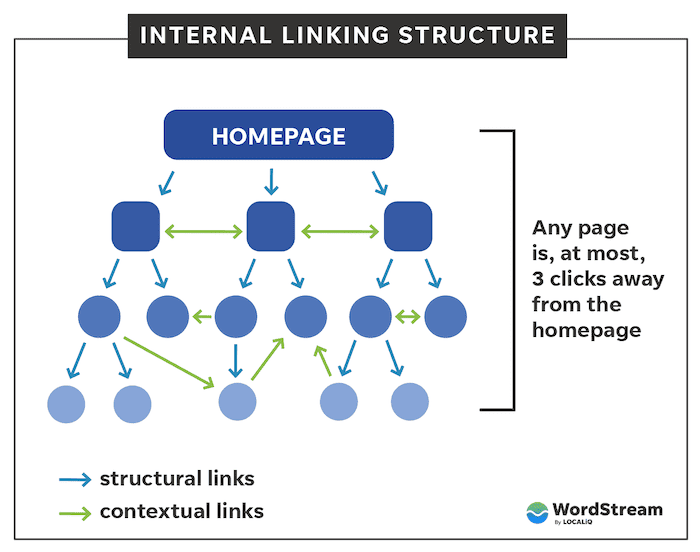
Image Source: WordStream
Role of Internal Linking in Enhancing SEO Strategy
Internal linking is the most important SEO tool for website optimization.
#Eases Google Indexing
Google Crawlers prefer internal linking to index new content on websites, and these strategies lead to faster, more accurate content indexing.
#Increases Site Strength to Internal Pages
You can transfer link juice from your homepage or other popular sites to your internal pages by building effective links. This connectivity helps improve your overall search engine results.
#Boosts SEO
Internal links with keyword-rich anchor text increase content value and help improve ranking in search engine results and SERP features.
#Enhances Value for Visitors
You can enhance the user experience, promote prolonged site engagement, and build trust by connecting relevant content.
Benefits of Internal Linking
- Enhances usability using anchor text
- Improves page rank
- Boost page views
- Reduces the bounce rate
- Improves the site’s indexing
Examples of Internal Linking
1. Linking to Related Pages
In the blog post about ‘Enhancing web scraping services with Data analytics and brand monitoring’, you can link to “Brand Monitoring” and “Data Analytics” for a higher authority page on your website.
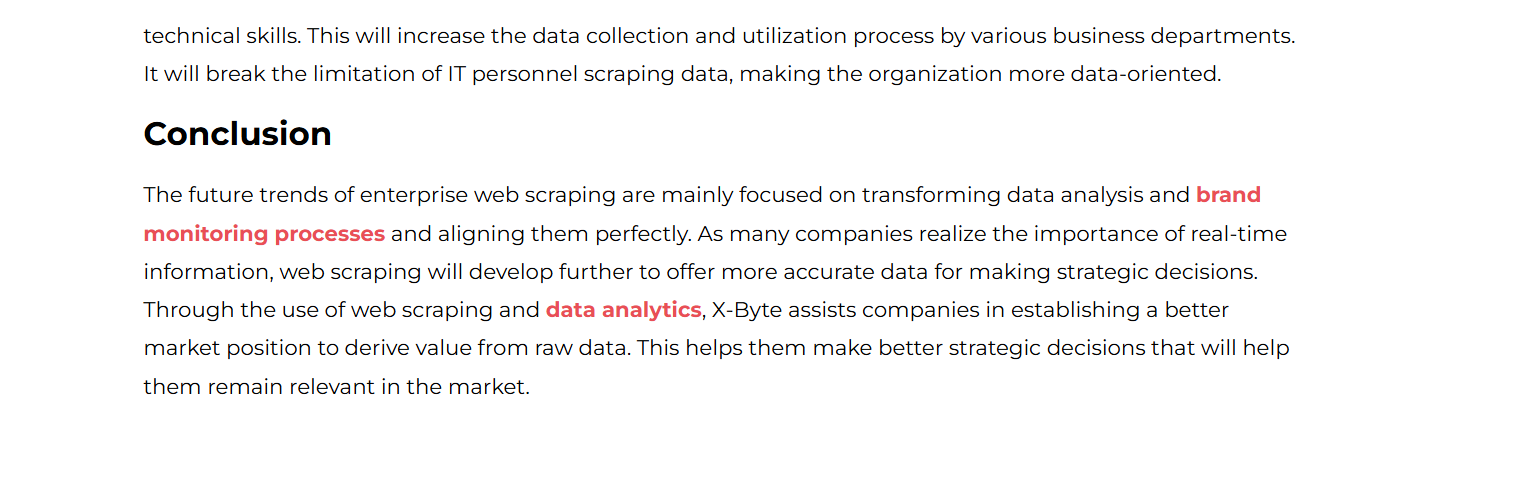 2. Linking to Cornerstone Content
In the blog post about Working with an AWS Premier Tier Services Partner, you can link to your “Cloud Development Services” to complement the topic and show your service in detail.

3. Breadcrumb Navigation
On the “Portable Speakers” product page, the breadcrumbs will include internal links to the “Portable” and “Party Speaker” category pages.
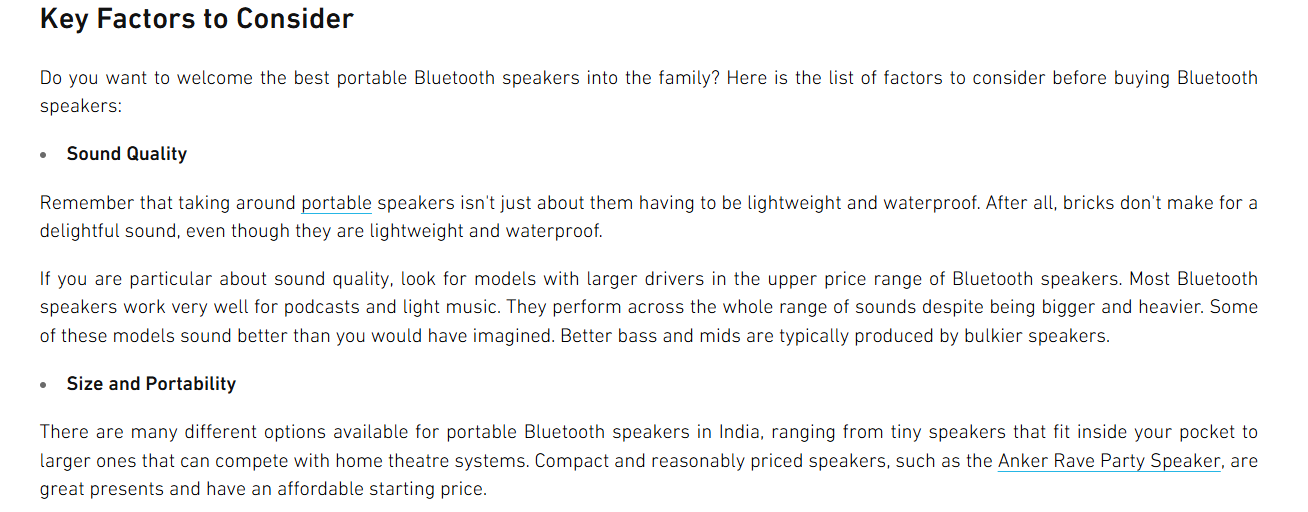
4. Contextual Links
Links are placed naturally within content paragraphs. On an e-commerce page that displays “Features of Samsung S21”, you can link to a page that shows several Samsung mobile phone models, on a page explaining Samsung S21 Features, link to Samsung Mobile Models Comparison.
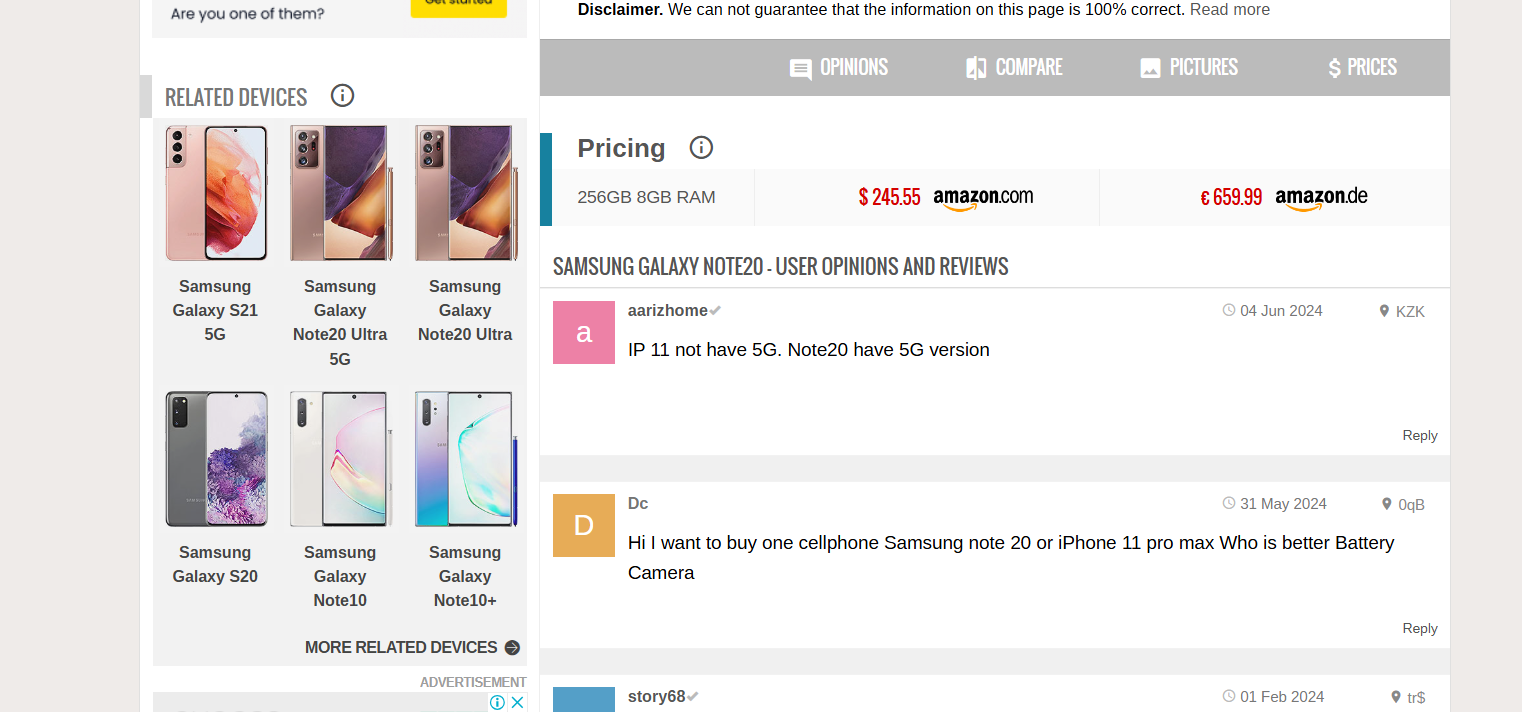
5. Link from New to Old Content
For the blog post about “Mobile App Development Trends 2024”, you can link to the previous blog that shows Mobile App Development Trends 2023.
Further study: Resources to study internal linking and its best practices:
- https://yoast.com/internal-linking-for-seo-why-and-how/
- https://neilpatel.com/blog/the-complete-guide-to-internal-linking/
- https://backlinko.com/hub/seo/internal-links
- https://moz.com/learn/seo/internal-link
What is External Linking?
Hyperlinks to pages on other websites are called external links. Hyperlinks are links aimed at a domain that is not the same as the one on which they are generated.
Both inbound and outbound external links are common phrases. In the first instance, we are talking about links that point to your website from another website. The latter are links to other domains that you have added to your website.

How External Linking Works?
- Connects your content to authoritative and relevant websites
- Signals credibility and trustworthiness to search engines
- Helps search engines understand content context and relationships
- Improves user experience by offering additional reference resources
- Enhances topical authority through association with high-quality domains
- Supports natural link-building and SEO best practices
Role of External Linking in Enhancing SEO Strategies
#Enhanced credibility
You can request that search engines identify your website as a trustworthy source by including links to reputable, high-quality websites. Both your website’s credibility and its search engine ranking may benefit from this.
#Enhanced referral traffic
If you provide links to other websites, you can draw in readers from different sites who are curious to find out more about the subject you are covering. This will enhance website traffic, which in turn might raise your website’s search engine ranking.
#Increased Visibility
External linking helps your website to appear in other websites’ search results.
#Improved User Experience
You can improve your website’s user experience by including links to relevant, helpful websites. Higher levels of happiness and engagement might follow, which could help your website rank higher in search results.
#Better Indexing
Search engines find and index your website’s content more quickly when you connect to other websites. This can help search engines recognize the context and relevance of the information on your website, thereby increasing your website’s visibility in search results.
Benefits of External Linking
- A high-quality external link increases your website’s authority.
- External links to other websites will not lower your page rank.
- An external link is equivalent to providing other resources for reading content.
- External link boosts credibility.
Examples of External Linking
1. External Linking to Relevant Sources
It is essential to include an external link, but ensure it adds value to both the audience and the content. External links add context and support the main points by linking to relevant websites with higher domain authority.
For example, provide external links to studies, infographics, films, data, or other resources that support or expand upon your points of contention.
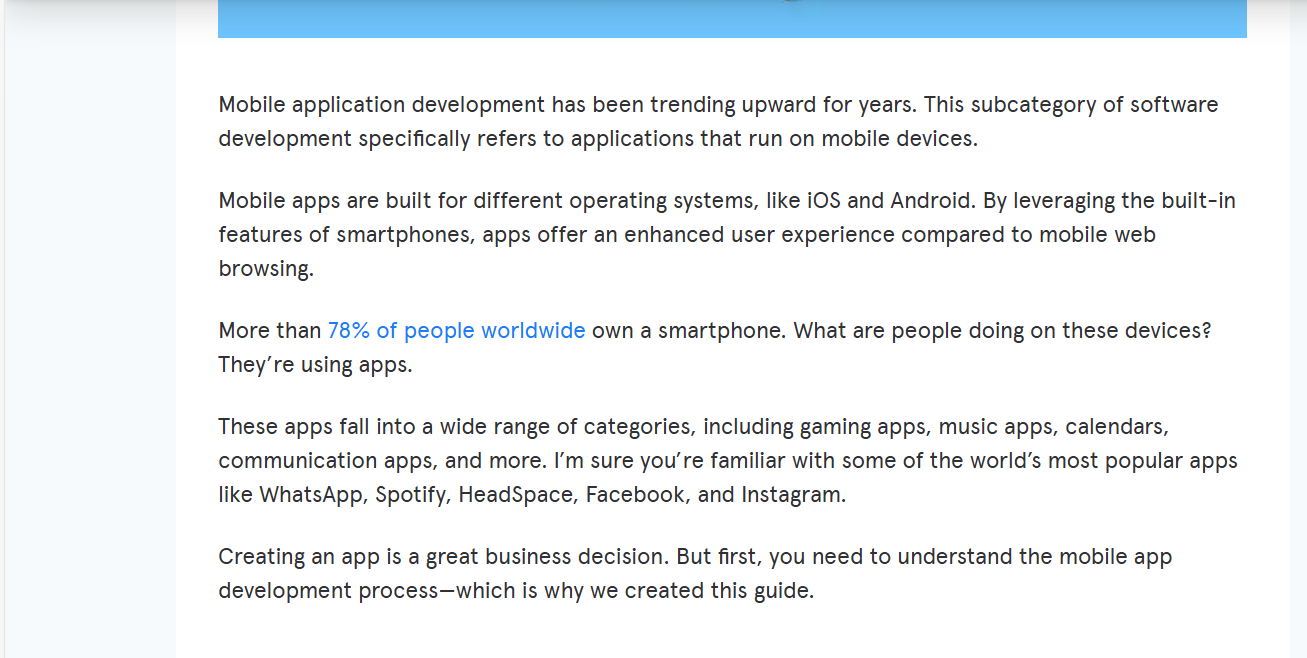
Selecting anchor text for external links is vital for helping search engines understand the context of the linked page, enhancing SEO strategy, and ensuring users know what to expect when they click the link.
2. External links to Authoritative Sources
The quality of the source link matters a lot. Add external links to highly authentic, professional source websites. If external link websites contain low-quality information or clickbait content, then you will find a reduction in website traffic.
Example:
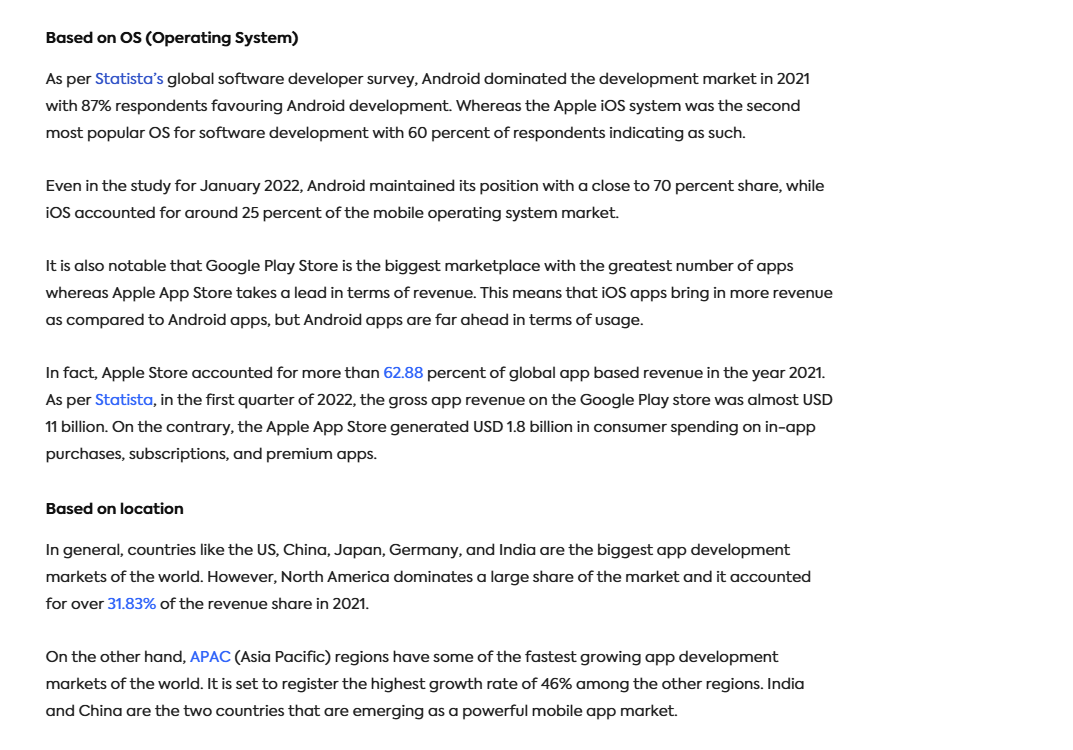
Here, the highlighted anchor texts are linked to various reputable and authentic sources of the industry. Here, if you have placed links to sources that are not trustworthy, then you will need to use the nofollow attribute.
3. Adding Helpful Links
In what proportion should your content contain external links?
It is important not to overburden readers with too many internal or external links. Optimizing the reading experience for readers must be the primary objective while creating links. If readers see that you are using them only to further your SEO strategy, you might lose them.
For example, there are several external links, and it ranks #1 on Google SERP for several keywords. Hence, you can add external links as long as they add value to your website.
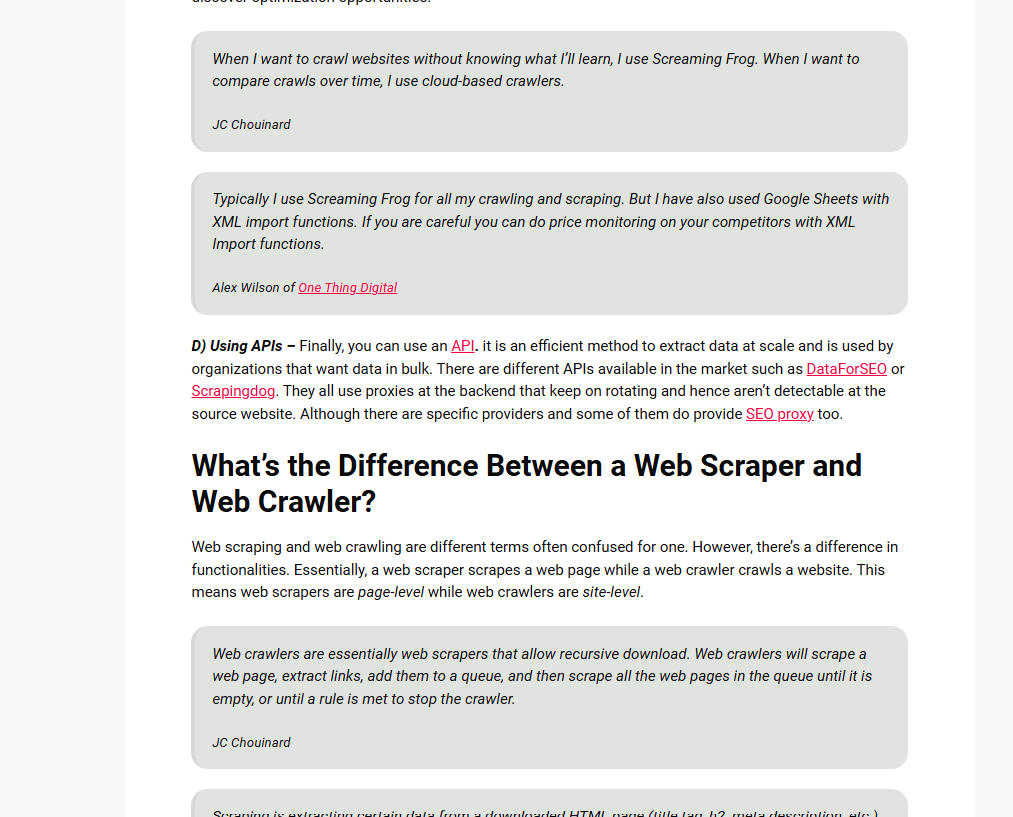
4. Do not link to the Competitor’s Website.
Linking to websites that compete for the exact keywords will be unproductive. For instance, you should not link to a website that currently ranks #1 for the phrase “Best SEO practices” if you’re aiming for that rank.
Instead, include links to other websites that complement your content, such as general information pages. You can link to a video about a particular SEO practice that is not on a competitor’s website by using the “Top SEO practices” example
5. Opening External Links in a New Tab
Your external links must open in a separate tab. The main benefit of opening links in a new tab is that it gives your visitors the most freedom to interact with your website.
Example:
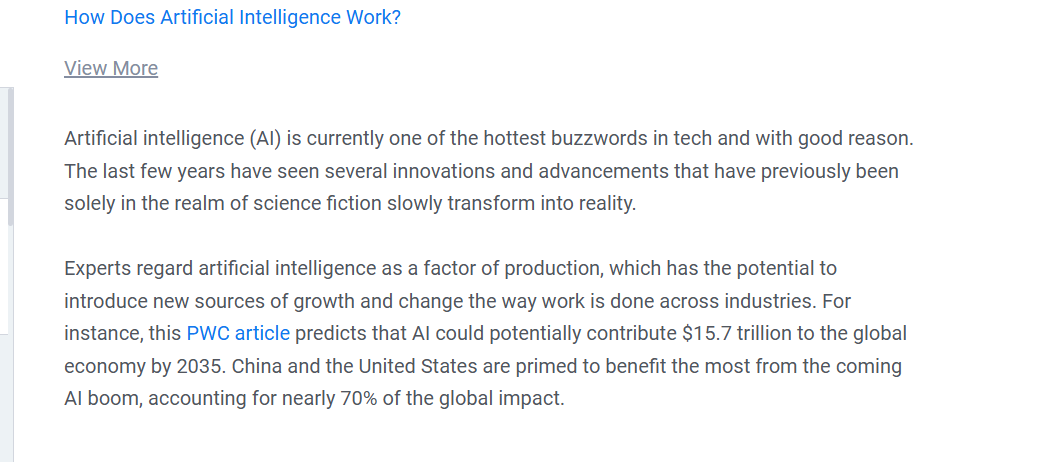
The above PWC article includes an external link that opens in a new tab, allowing users to continue reading.
Further study: Resources to study external linking and its best practices:
- https://www.semrush.com/blog/external-links/
- https://developers.google.com/search/docs/crawling-indexing/links-crawlable
- https://moz.com/learn/seo/external-link
- https://blog.hubspot.com/blog/tabid/6307/bid/235/no-website-is-an-island-why-and-how-to-link-to-others.aspx
Best Practices for Internal and External Linking
| Internal Linking (Staying In-House) | External Linking (Going Outbound) |
| Use Descriptive Anchor Text: Avoid “click here.” Instead, use keywords that describe exactly what the target page is about. | Link to High-Authority Sites: Only link to reputable, trustworthy sources (e.g., .gov, .edu, or industry-leading publications). |
| Follow the Three-Click Rule: Ensure any important page on your site is no more than three clicks away from the homepage. | Open in a New Tab: Always set external links to target="_blank" so readers don’t completely leave your website. |
| Prioritize Deep Linking: Link to specific blog posts or service pages rather than just your “Home” or “Contact Us” pages. | Check for Broken Links: Regularly audit your outbound links to ensure you aren’t sending readers to “404 Not Found” pages. |
| Maintain Relevance: Only link to pages that genuinely add value to the current topic. Forced links hurt user experience. | Attribute Your Sources: Use external links to cite statistics, quotes, or original research to build your own credibility. |
| Use a Natural Quantity: Don’t overstuff a single paragraph with links. Aim for a helpful, readable density. | Avoid Linking to Competitors: Be careful not to link to a page that competes directly for the same primary keyword you are targeting. |
| Match the Tone: Ensure the page you are linking to matches the “vibe” and level of expertise of the current article. | Prioritize Recent Data: When linking to studies or stats, prioritize sources published within the last 2–3 years. |
| Update Old Content: Add links from new articles back to older ones, and vice versa, to keep your “link juice” flowing. | Vary Your Sources: Don’t just link to the same site repeatedly. Use a diverse range of experts to show thorough research. |
| Link Early in the Article: Placing an internal link in the first few paragraphs can reduce your bounce rate by giving readers a “next step.” | Watch the Link Density: Avoid “link farms” (too many external links in a row), as this can look like spam to search engines. |
| Use “Follow” Links: Most internal links should be “dofollow” so that search engines pass authority throughout your site. | Use “Nofollow” for Ads: If you are linking to a site because of a sponsorship or affiliate deal, use the rel="nofollow" or rel="sponsored" tag. |
| Avoid “Orphan” Pages: Ensure every new page has at least one internal link pointing to it so it can be indexed easily. | Ensure Contextual Fit: Ensure the linked page actually discusses what your anchor text claims it does, to avoid “bait and switch” UX. |
Final Thoughts
Links serve two primary masters: the reader and the search engine.
- For readers: Links provide context, offer deeper value, and build trust.
- For search engines, links help crawlers understand your website’s hierarchy and assess your content’s credibility.
By understanding the specific benefits and best practices for both types of links, content writers can design a solid linking strategy that improves your content’s SEO performance, enhances the user experience, and positions your content as a trusted industry resource.
Note that linking strategies should evolve as the search engine optimization landscape changes. With this understanding, you can build a network of internal and external links that can improve your SEO efforts.